Outdoor App Development: Routes, Group Trips and Club Operations

7 min read
Quick answer
Outdoor app development should connect a useful trip journey: discover a place or route, assess the plan, find companions, join an activity and receive the information needed to participate. Include the club or organiser tools that keep that journey current.
Decide separately whether the product needs route display, GPS recording, navigation or live member location sharing. These are different requirements. AI itinerary planning can be an editable module within the experience; it does not replace confirmed bookings, maintained route information or human judgement.
- Choose a first activity type, participant group and operating model.
- Connect member-facing flows with the people who manage routes and trips.
A hiking, camping or group travel app needs to carry a person from inspiration to a plan they can act on. A route card, companion post and activity booking may look like separate features, but participants need consistent route, meeting and booking information.
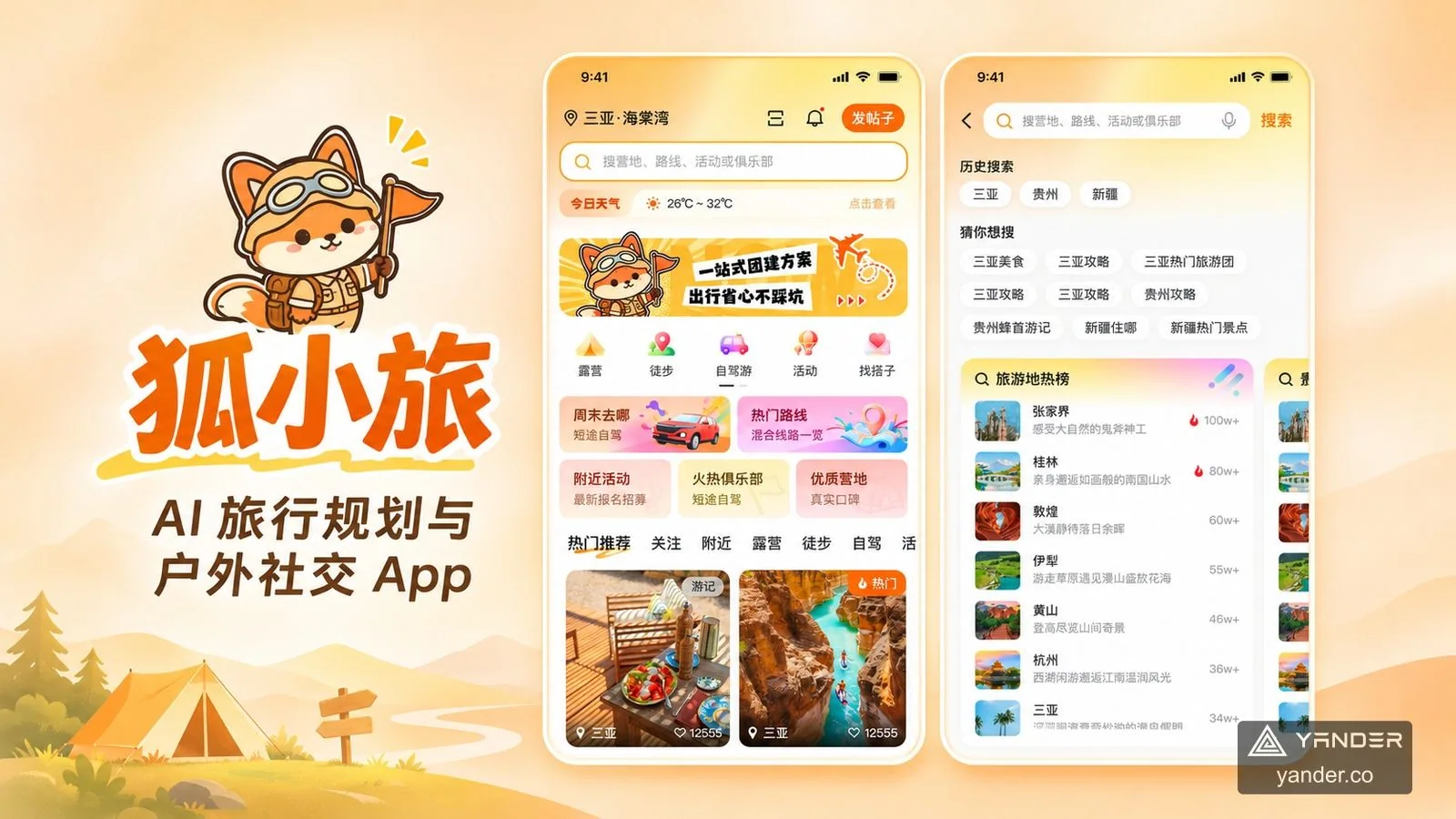
The 狐小旅 AI travel and outdoor community app connects discovery, editable itineraries, companions, route recording, registrations and club operations in its documented product scope. It is a useful reference for defining those relationships before pricing individual screens.
This guide focuses on outdoor and group travel workflows. For the broader member, content and interaction decisions, use the community app MVP guide.
Choose the first trip and the people who run it
Start with one activity and one audience: a local hiking group, a campsite community, a road-trip club or an operator organising paid outings. Explain what the traveller needs to finish and who makes the trip possible.
An informal companion request and a ticketed club activity create different commitments. Decide whether the app helps people discover one another, manages confirmed participation, sells a booking, or combines those roles in an agreed first scope.
Keep the launch geography practical. A UAE car club and a European hiking community may share planning and group coordination patterns, while needing different route content, languages, providers and operating arrangements. Treat those differences as brief inputs.
Give route discovery enough information to support a decision
Describe what a traveller needs to compare options: destination, route, duration, meeting point, participation requirements and relevant equipment. Decide where each detail comes from and who maintains it.
A content post can inspire a trip, while a route record has a different job. Identify the route owner, its latest review and how a correction is submitted. Weather information, access conditions and travel advice need their own sources and review responsibilities.
In 狐小旅, content and maps support campsite, hiking and road-trip discovery. The documented route workflow brings GPS tracks, places, photos and notes into records that can be edited and reviewed. That is a useful distinction between a travel story and a maintained route.
Turn companion discovery into a clear group plan
For a companion request, define the proposed activity, dates, meeting area and expectations. For an organised trip, also identify the organiser, joining conditions, participant status and the latest confirmed plan.
Choose what coordination belongs inside the app. An itinerary card, meeting reminder or equipment list can give a group a shared reference. If messaging is included, define who belongs to the group, what happens after a participant leaves and who handles reported messages.
Plan changes matter as much as joining. Explain how a participant learns that an activity is full, a meeting point has changed or a trip has been cancelled. Keep expressions of interest distinct from accepted or paid participation so organisers and travellers share the same understanding.
Distinguish route maps, recording and live location sharing
The word “GPS” can hide several different requests. Name the experience the first release must deliver and ask the team to estimate and demonstrate that behaviour.
If recording must continue with the screen locked, or a feature must work with weak connectivity, state those conditions explicitly. They need their own feasibility and acceptance work; a map or saved track does not establish them.
狐小旅’s documented GPS route recording is relevant evidence for collecting and maintaining route records. It is not evidence of live convoy position sharing, background location operation or offline navigation.
| Capability | What the traveller does | What to ask the team to demonstrate |
|---|---|---|
| Route display | Views a planned route and its places | Map content, route details, update ownership and unavailable data |
| GPS route recording | Collects a record of their own trip | Recording controls, saved tracks and recovery requirements |
| Navigation | Uses guidance to follow a route | The agreed guidance behaviour, providers and supported conditions |
| Live location sharing | Shares current position with other participants | Who can see whom, sharing controls, update freshness and connection loss |
Scope club and booking operations alongside the app
List the work behind each trip: maintaining routes, publishing activities, managing participants and answering questions. Decide which actions belong to club leaders, merchants and the platform team.
If the first release includes paid activities or campsite bookings, describe availability, order states, payment, confirmation, check-in, cancellation and refunds. Name who resolves an exception and what information they need. A free companion platform may not need these transaction features at launch.
The published 狐小旅 case describes merchant, club and platform workspaces alongside registrations, bookings and digital tickets. Use that scope to discuss the operating surfaces your product requires. The case is not a statement that your launch will use a particular payment provider, map service or implementation stack.
- Who can create and change a route or activity?
- Who confirms participation and communicates a plan change?
- If money changes hands, who manages availability, refunds and support?
- What does each operating role need to see or edit?
Add AI planning where travellers can inspect and edit it
AI can help turn dates, departure points, group size, budgets and preferences into a proposed itinerary. Define how travellers compare options, correct the result, save it and share it with companions.
Keep suggestions and confirmed arrangements distinct. An itinerary suggestion is not an available campsite reservation, a checked route condition or a guaranteed safe plan. Decide which information comes from maintained sources and which changes require organiser confirmation.
狐小旅’s documented AI workflow produces editable trip handbooks. If that module belongs in your first release, use the AI app MVP and operating-cost guide for evaluation examples, usage assumptions and support requirements. If the central need is joining a club trip, that journey can be scoped before adding AI planning.
Use a real trip scenario to compare development proposals
Write one scenario from discovery through participation and follow-up. Include the traveller, organiser, route information, joining rules and changes that must be handled. Attach the content, designs and systems you already have.
Ask each supplier to identify what it will deliver for mobile users, club staff and platform operators. Request acceptance examples for a changed trip, a cancelled booking and an interrupted route recording where those capabilities are in scope.
Use the app development company guide to assess relevant delivery evidence and English communication, and the app cost checklist to compare proposals. Our mobile app development service covers the discussion from product flow through backend and operations. Bring a real trip brief so the comparison stays concrete.
- First audience, activity type, launch countries and languages.
- Route content, companion or joining flow, and organiser responsibilities.
- Required map behaviour, recording conditions and optional live sharing.
- Booking and AI modules included now, deferred, or awaiting discovery.
Put this into practice
Explore the related work and delivery scope.
- Mobile app development
Scope participant, organiser and platform workflows with our Guangzhou team.
- 狐小旅 travel and outdoor community app
Review the documented route, companion, booking and club workflow.
- HD 羊村 campus social app
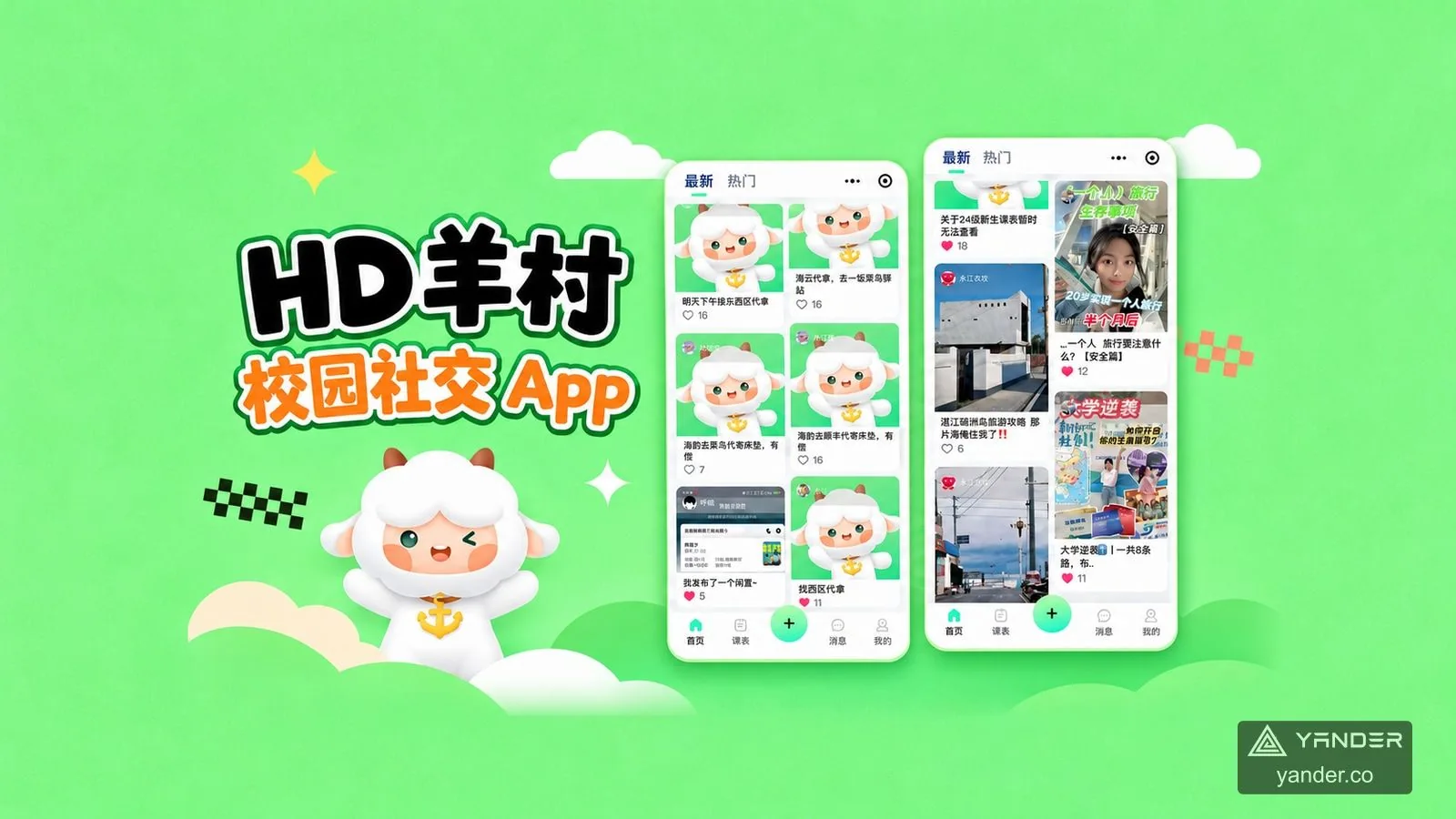
See another example of community content connected with activities.
- Community app features and MVP scope
Plan members, content, interaction and events before expanding the platform.
- AI app MVP scope and operating costs
Evaluate optional AI planning as a bounded product module.
- App development cost checklist
Include the backend, integrations, testing and operating responsibilities.
Sources and scope
- 狐小旅 AI travel and outdoor community app
Owner-confirmed app design and development. The documented product scope covers routes, GPS recording, companions, clubs, bookings and editable AI itineraries. The public gallery includes original homepage explorations, search and feedback interfaces; it does not demonstrate live convoy sharing.
Describe the trip your first release should support
Share the activity, target travellers, launch countries, routes and joining process, plus who will run the clubs or activities.
Discuss an outdoor or group travel app