AI travel / Outdoor community
狐小旅 | AI Travel Planning & Outdoor Community App
Yander designed and developed 狐小旅, an outdoor community and travel-planning app. Campsite and route discovery, editable AI itineraries, GPS route recording, clubs, group chats and event bookings connect planning with group travel.
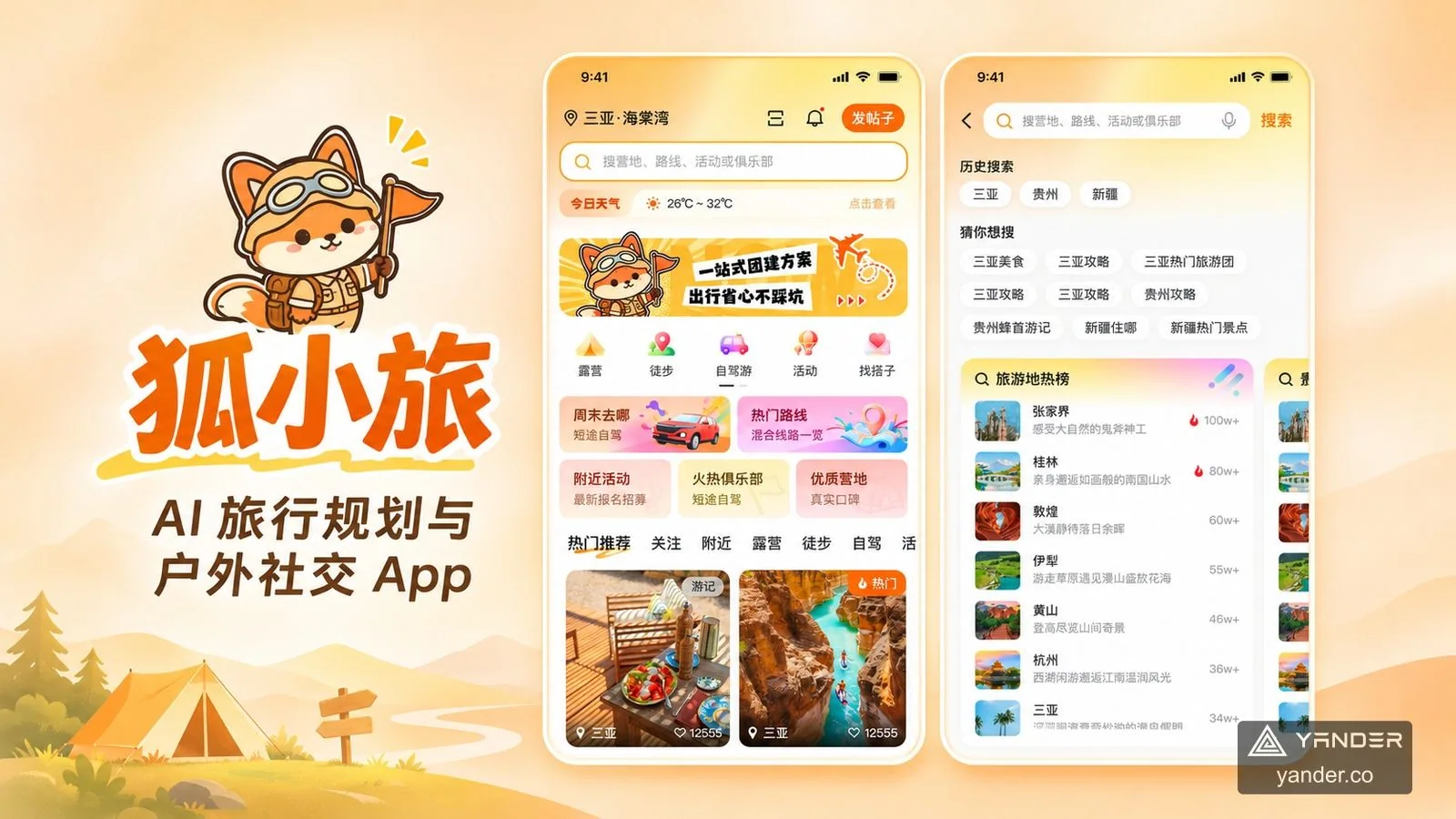
- Industry
- Travel technology · Outdoor life
- Platforms
- Mobile app
- Services
- Product architectureUX/UI designApp developmentAI integration
Project overview
Bring places to explore, routes to follow, and people to travel with into one journey
Planning an outdoor trip often means moving between travel posts, maps, booking pages, and group chats. Finding a campsite is only the beginning: travelers still need a route, a schedule, companions, and clear information about weather, equipment, and meeting points.
Yander delivered the product architecture, interface design and complete app development for 狐小旅. Five main destinations organize the experience: Home, Discover, AI Itinerary, Messages and My Account. Travelers can explore through content or maps, edit an AI itinerary, register for an activity, and coordinate in direct messages, activity groups and route groups. GPS route records and trip reviews return to the community as material for future journeys, while club, merchant and platform workspaces support operations.
- Travel modes
- Camp · Hike · Drive
- Planning
- Natural language + maps
- Reusable assets
- Routes and trip handbooks
- Participants
- Travelers · Clubs · Merchants
Interfaces and design exploration
From homepage directions to search and content-feedback interactions
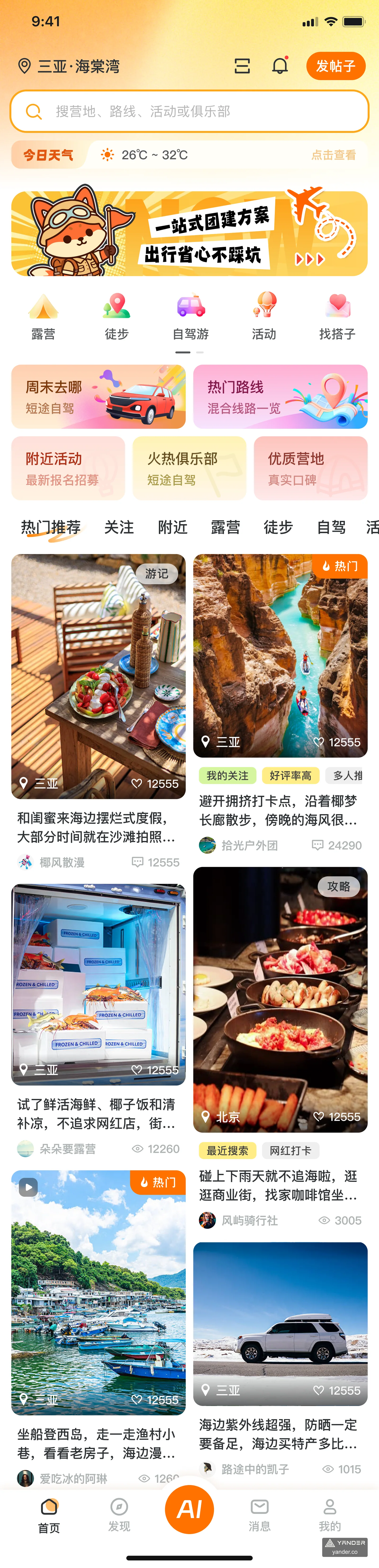
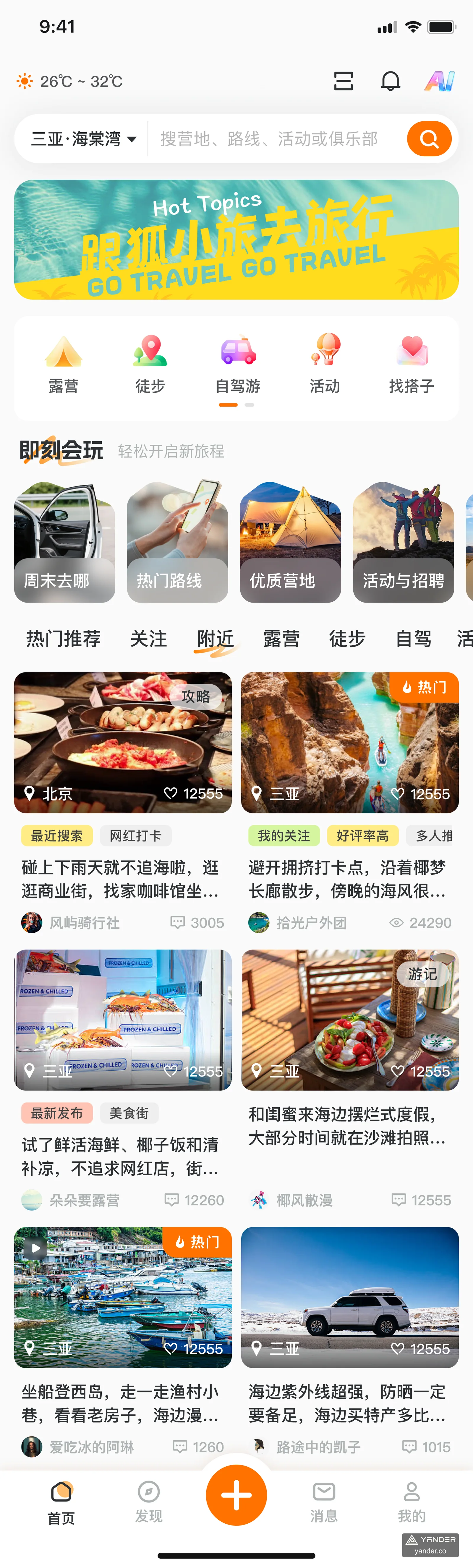
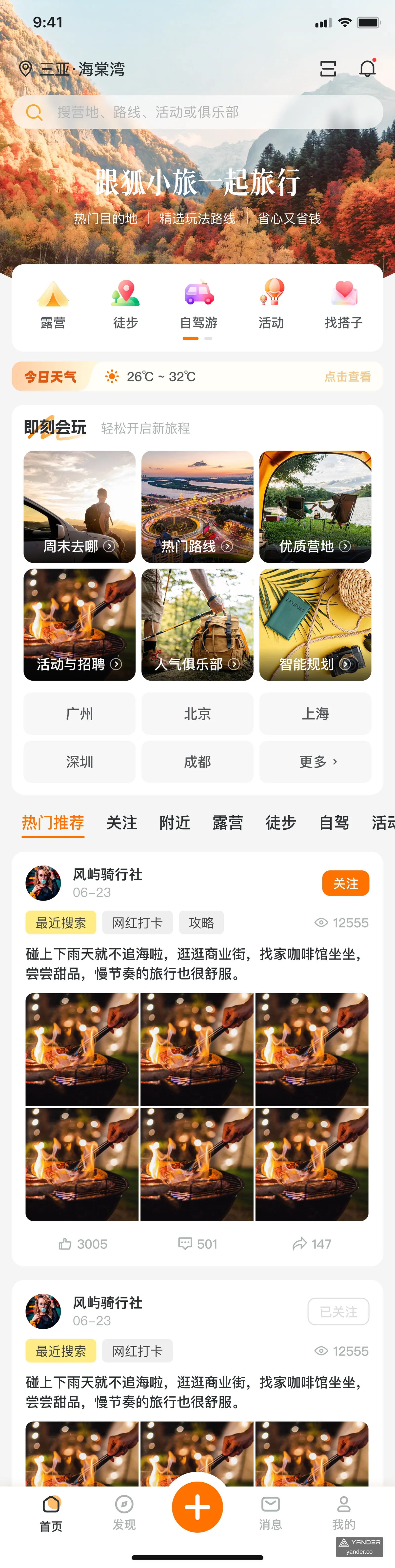
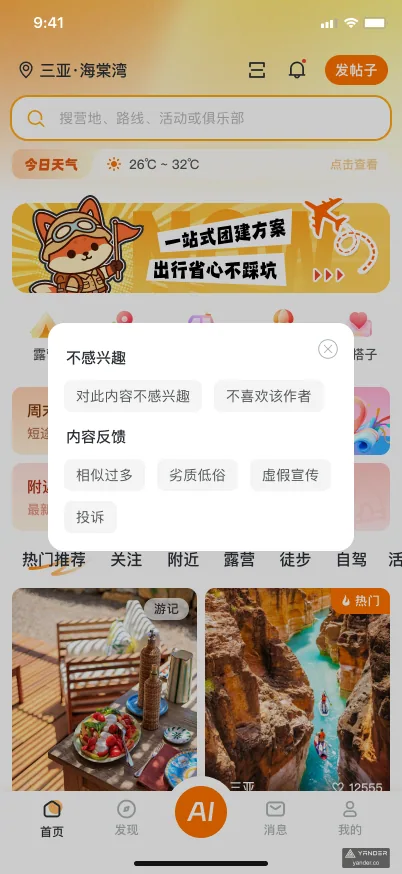
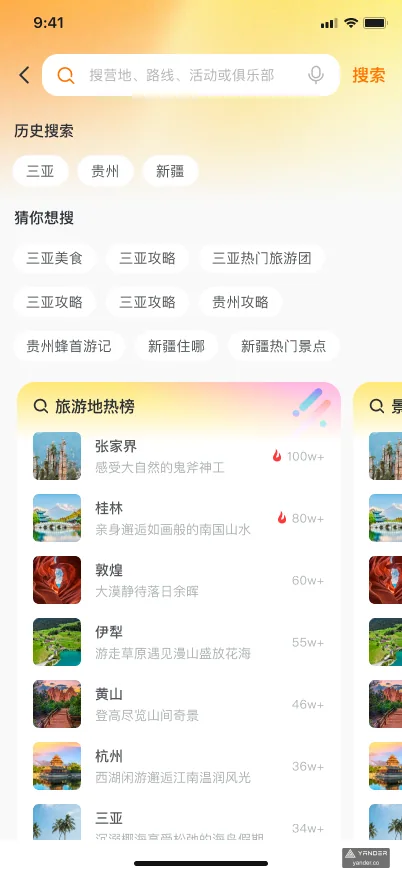
These interfaces are extracted from the original design boards: three homepage visual and layout explorations for the same product, followed by search history, destination discovery, and content-feedback interactions.
Core challenge
Turn abundant travel content into a plan people can confirm, coordinate, and use
Travel inspiration, AI suggestions, real-world routes, event availability, and group messages change at different speeds. The product needs to distinguish recommendations from confirmed arrangements while supporting location, limited connectivity, route risks, and collaboration outdoors.
Solution
Use routes and itineraries to connect discovery, planning, transactions, and companions
Maps and content cards support discovery and comparison. AI turns departure points, dates, group size, budgets, and preferences into editable plans. A trip handbook connects routes, campsites, activities, and groups; registration and orders support fulfillment. Field recording, human review, and version updates make real travel experience reusable.
Product capabilities
A complete travel experience, from the first search to the next departure
01
Campsite, route, and destination discovery
Location and weather, global search, maps, and lists organize campsites, hiking, road trips, activities, and clubs. Categories, nearby content, filters, and recommendation reasons help travelers move from inspiration to specific options.
02
Editable AI trip planning
Travelers describe an idea, clarify the important conditions, and compare alternative plans. Route maps, daily schedules, place cards, and equipment guidance form a trip handbook that supports conversational changes, manual edits, saving, and sharing.
03
Field recording and reusable routes
GPS tracks, places, photos, and voice notes become route records. AI helps structure segments, descriptions, and risk drafts before creator confirmation and the appropriate review. Map editing, previous versions, and update history support ongoing route maintenance.
04
Community, companions, and travel groups
Travel posts, companion requests, and clubs connect people with shared interests. Direct messages, activity groups, and route groups support coordination through itinerary cards, meeting reminders, equipment information, and trip reviews.
05
Registration, bookings, and digital tickets
Campsite products, activity ticket types, dates, and availability connect to order payment, digital vouchers, check-in, redemption, and refunds, turning route discovery into a traceable registration and booking flow.
06
Merchant, club, and platform operations
Role-based workspaces manage routes, activities, products, members, groups, and fulfillment. Platform teams handle business verification, content review, order exceptions, messaging safety, and AI usage records within defined permissions.
Product outcome
Let each trip leave behind routes, relationships, and experience people can use again
狐小旅 connects discovery, planning, registration and booking, travel coordination, and sharing after the trip. AI plans become editable maps and handbooks, field experience becomes maintainable routes, and merchants and clubs manage activities, services, and members in the same product.
- Connected journeys
- Discover, plan, participate, and reflect
- Editable AI
- From an idea to a map and trip handbook
- Shared operations
- Travelers, clubs, merchants, and platform teams
Project record
Original product work designed and developed by Yander
This case documents the product scope, interface design, and engineering work Yander delivered for the client using project screens, recordings, and delivery materials.
- Portfolio record
- Original design and development work delivered by Yander
- Live product
- No public product URL available
- Project date
- Not publicly disclosed
- Production stack
- Only technologies named in this case are published; the complete stack is not disclosed
- Client-approved testimonial
- Not publicly disclosed
- Measured before/after results
- Not publicly disclosed
Case FAQ
How does an AI itinerary in 狐小旅 become useful on a real trip?
AI first clarifies the departure point, dates, available time, budget, and preferences that affect route selection. It then organizes the plan into a map, daily schedule, place cards, and equipment guidance. Travelers can make conversational or manual changes before saving and sharing it with companions.
How is a route record different from a travel post?
A route record organizes tracks, places, time, photos, voice notes, and risk information. AI-assisted structuring is followed by creator confirmation, review, and version updates so the route can be consulted, added to an itinerary, and maintained through later trips.
Why does a travel community need merchant and club workspaces?
Routes and content lead to activities, bookings, and coordination. Workspaces let providers manage activities, products, registrations, tickets, members, and groups, connecting discovery with the service delivery and ongoing operations behind a trip.
Next case study
Unico
Have a product in mind?
Let’s turn the difficult part into a product people understand.
Bring us the workflow, business constraints, and ambition. We will help shape the product and ship it.
Start a project