Designing an AI product around a real job

2 min read

A useful AI product starts with work that needs doing: turning source material into a figure, preparing a decision, or updating a record. The model’s response is one artifact inside that larger task.
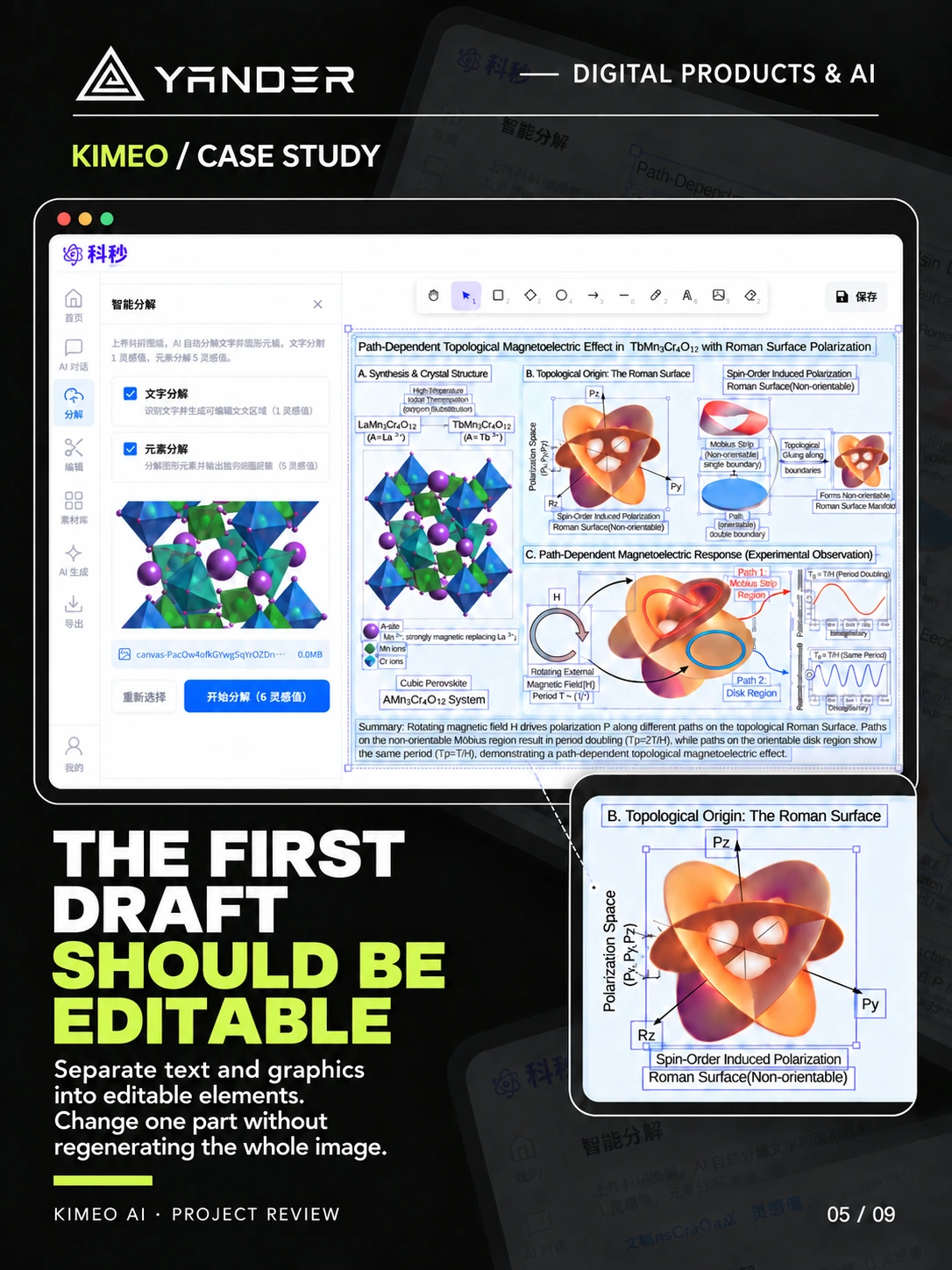
KIMEO’s input-to-export workflow illustrates this product question. Once a draft exists, what must the user be able to inspect, edit, reuse, and deliver? The answer should shape the workspace and the first-release scope.
Describe the job in ordinary language
Write the task without mentioning a model or a chatbot. Who is doing the work, what starts it, and what result do they need?
Use that description to decide which parts of the experience should be automated, assisted, or handled directly by a person.
Build a workspace around the result
Place inputs, evidence, and an editable output close together. Help the user inspect the result while keeping the original task in view.
Save useful intermediate work. A person should be able to resume the task without recreating the entire conversation.
Make approval an intentional step
Use explicit review for actions that change shared information or affect another person. Name the action and show its scope.
Test the final step as part of the product flow. Generating a promising answer is different from completing a useful task.
Put this into practice
Explore the related work and delivery scope.
- Related project: KIMEO
Inspect the published product workflow and delivery context.
- Explore the relevant service
See the engagement scope and start a specific project conversation.
Build around the task your customer must finish
Share the input, intended output, and the steps users still perform after generation.
Discuss your AI product